
Finding People Through Savannah Records
Begin with the fact that has a date and source. A full name can lead to the GSCCCA real-estate index, the statewide court portal, a city staff listing, or an estate file. An address points first to the Chatham tax roll and SAGIS parcel map. An old street address may require a printed directory and a ward map before it can be tied to a modern parcel. Phone numbers are less stable, so confirm any directory hit with an official record that states a role, date, and place.
No single Savannah lookup establishes identity. The same name may belong to an assessed owner, deed grantor, court party, business agent, or permit applicant. Compare the middle name or initial, date, address, and stated role. Keep conflicting entries separate until a second record connects them. That discipline is especially important with common surnames and historical records that used spelling variants.
- Search the Chatham deed index for the name and note document type, date, book, page, and other parties.
- Check re:SearchGA for public dockets, then read the disposition rather than treating a filing as an outcome.
- Use the assessor and SAGIS when an address or parcel is known, separating the situs address from the owner’s mailing address.
- For family history, move to probate, cemetery, obituary, church, and vital-record sources that fit the period.
- When the web trail ends, contact the correct records office, library, archive, or Garden City Records Center.
Savannah People Search Offices
Savannah is the Chatham County seat, so many useful records are county records. The Clerk of Superior Court combines the recorder role with custody of Superior Court files. The Board of Assessors identifies assessed owners, while the city Open Records Unit routes requests for municipal departments. Exact request rules, copy fees, and access limits are covered in Savannah public records. These contacts are the practical starting points when a portal omits an image or an older volume.
Chatham County Real Estate Division
133 Montgomery Street, Room 304
Savannah, GA 31401
912-434-8970
Chatham Superior Court Clerk
133 Montgomery Street
Savannah, GA 31401
912-652-7200
Savannah Open Records Unit
20 Interchange Drive
Savannah, GA 31415
912-651-6441
Why Chatham County Comes First
A Savannah postal address does not always prove that the place lies inside Savannah city limits. It may be in unincorporated Chatham County or another municipality. That boundary changes the keeper for police incidents, permits, code files, and some cemetery records. Countywide deeds, assessment, and Superior, State, Magistrate, Probate, Juvenile, and Recorder’s Court records still run through Chatham or the linked Georgia systems.
Check the parcel or jurisdiction before filing a request. City permits and municipal administration usually belong to Savannah. Deeds, probate estates, most assessment files, and major county court matters belong to Chatham. State certificates, corporations, licenses, inmates, and voter self-service belong to Georgia agencies. Federal cases go to the Southern District of Georgia through PACER. This custodian test prevents a common false result: asking the right question of the wrong office.
Search Chatham Deeds by Name
The GSCCCA index treats land filings as a directory of parties. Search a surname and given name, set Chatham as the county, narrow the date, and test the person as both grantor and grantee. A grantor transfers an interest; a grantee receives one. Results can include deeds, security deeds, liens, plats, real-estate UCC filings, trade names, and related instruments. The index is evidence that a document was recorded, not proof of current ownership or residence.
The official Chatham deed-search screen shows the fields used for this Savannah people search.
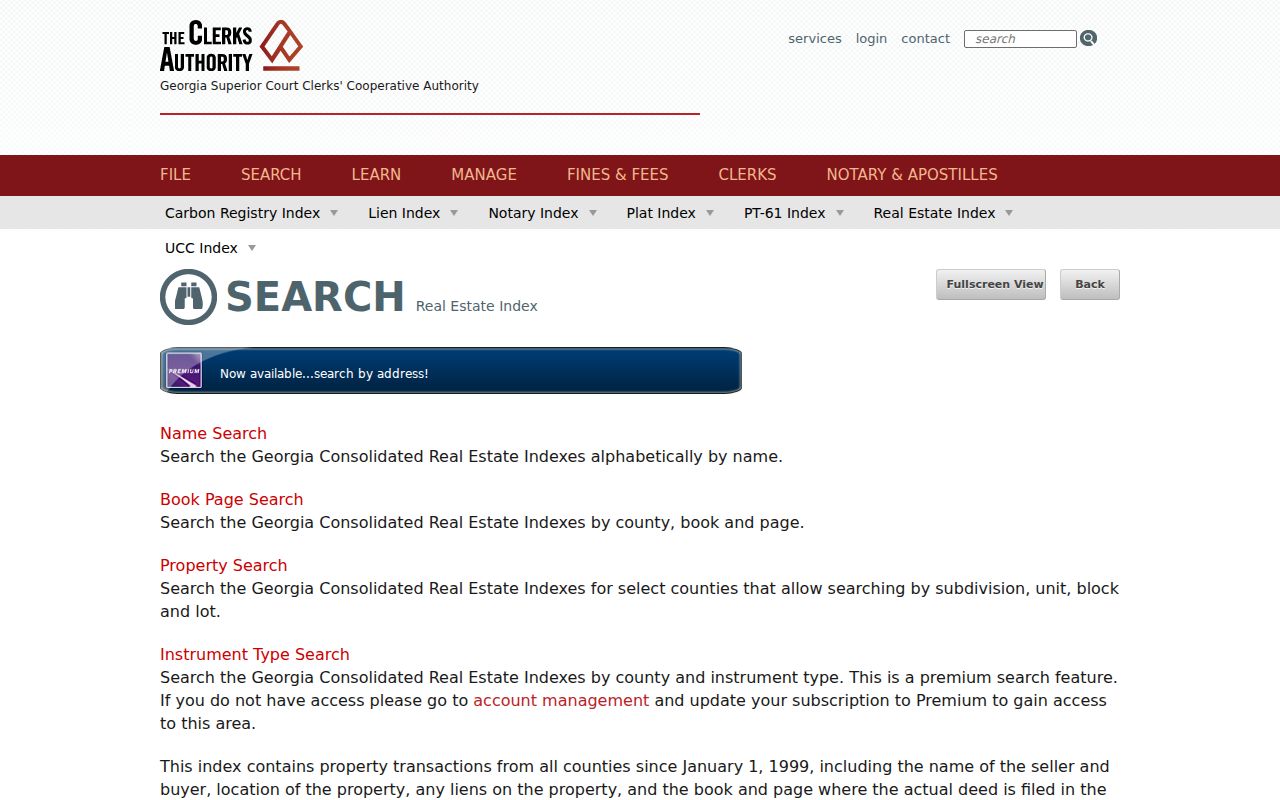
Capture the instrument type, recording date, book and page, and linked parties before opening or ordering a document. Images or certified-copy functions may carry a fee, while the clerk also offers counter, mail, and public-terminal access.
| Search control | Best use | Watch for |
|---|---|---|
| Party name | Grantor or grantee trail | Initials and name variants |
| County | Limit to Chatham | Nearby county filings |
| Date range | Target ownership period | Recording may follow signing |
| Book/page | Retrieve known citation | Index is not the full image |
Check Savannah Court Records
Georgia re:SearchGA is the shared public starting point for Chatham court files. Search by party name and narrow by court or case type when available. A docket is the dated list of filings and events in a case. It may show case number, parties, attorneys, charges or claims, hearing entries, and a disposition. A filing is only an allegation or request. Read the last entries and obtain the actual order before drawing a conclusion.
The Georgia court-search landing screen helps locate public Savannah cases.
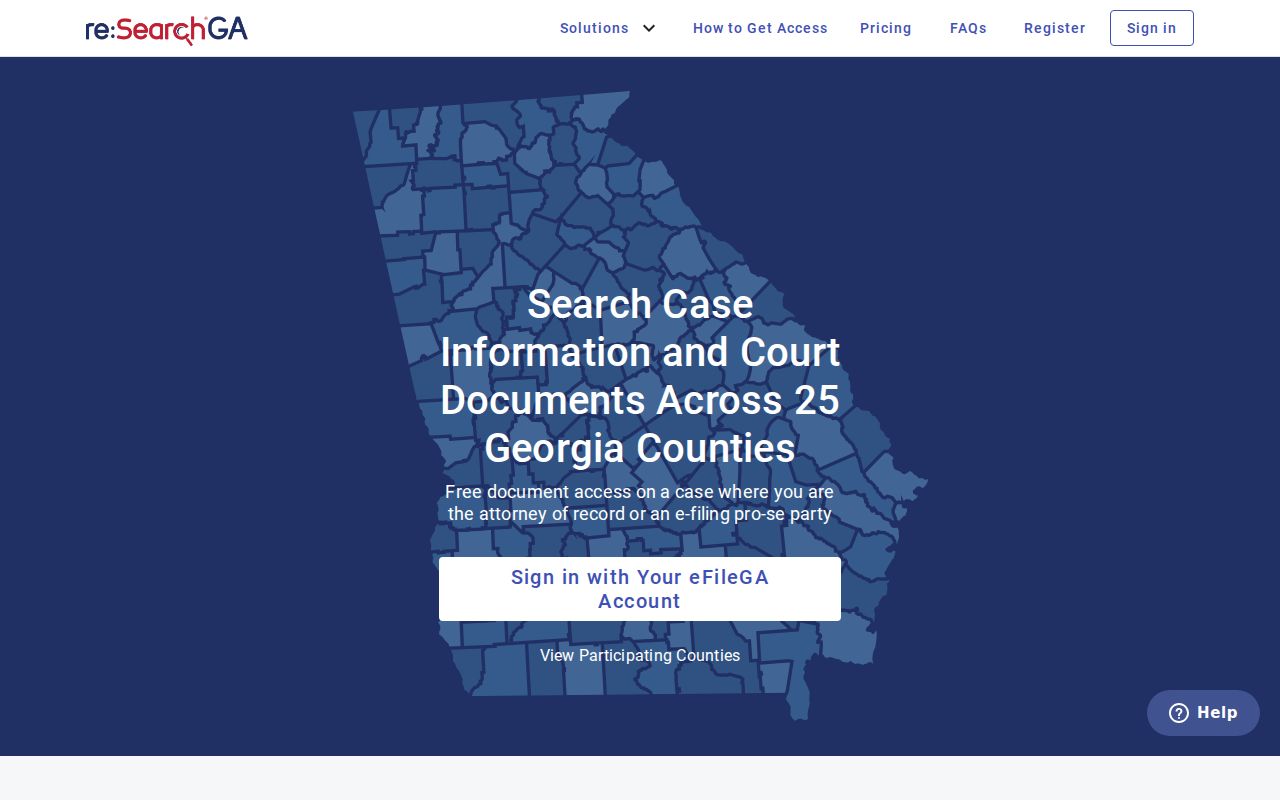
Free registration provides public docket and face-sheet access. Chatham states that printing is 50 cents per page. Sealed, juvenile, adoption, and other restricted material will not appear. For a missing file or certified disposition, contact the clerk or use a public terminal.
| Court | Covers | Name Search | Access |
|---|---|---|---|
| Superior Court | Felony, civil, domestic | re:SearchGA | Online, clerk, terminal |
| State and Magistrate | Misdemeanor, civil, claims | re:SearchGA | Online or clerk request |
| Probate Court | Estates, marriage licenses | Record Room | Mail or appointment |
| Recorder’s Court | Traffic and ordinances | County lookup | Portal, phone, email, counter |
| Southern District of Georgia | Federal cases | PACER | Account and document fees |
Locate Savannah Vital Records
Georgia and Chatham divide vital records by type and year. The Chatham County Health Department and Georgia Department of Public Health issue birth and death records. Statewide civil registration begins in January 1919. Birth certificates remain limited to the registrant and qualifying family or legal representatives. Certified death copies require a qualifying relationship, though current Georgia guidance permits a public plain-paper death record with the Social Security number removed.
Chatham Probate Court handles modern county marriage licenses and copies. Georgia DPH holds marriage records from 1952 through 1996; earlier and later county records come from Probate Court. DPH can confirm a divorce, but the decree remains with Chatham Superior Court. A certified copy bears the keeper’s authentication. An index entry only points to a record.
The Georgia vital-record request service lays out online, mail, and counter routes.
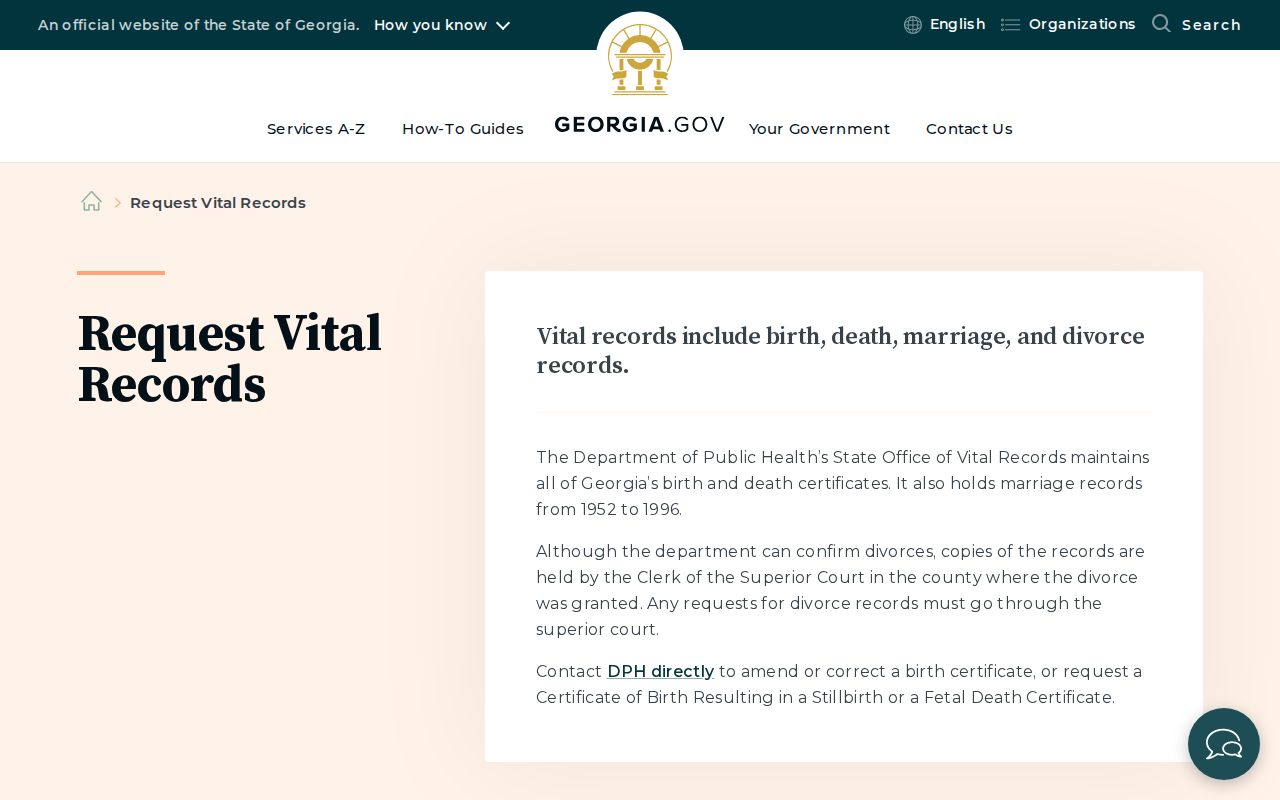
Use the current state instructions for identity proof, eligibility, payment, and processing. For people who lived before statewide registration, turn to church, cemetery, probate, newspaper, and family sources rather than assuming no event was recorded.
Trace Savannah Property Addresses
Property research works as a chain: address to assessor, assessor to owner and parcel, parcel to deed, then deed to prior parties. The situs address describes the physical parcel. The mailing address is where the assessor sends notice. A deed’s legal description may use boundaries, subdivision lots, or Savannah wards rather than either street address. Treat all three as distinct fields.
The SAGIS map places a parcel in geographic context, while the tax account addresses billing and the recorded deed proves conveyance. Owner and exemption flags can guide a search, but neither proves who lives at the property. Historic wards, squares, trust lots, and garden lots make map work unusually important in central Savannah.
- Situs address
- The location assigned to the parcel.
- Parcel or PIN
- The assessor’s identifier for a tract.
- Plat
- A recorded map showing lots, boundaries, or subdivisions.
- Legal description
- The deed language that identifies the land conveyed.
When Savannah Indexes End
Online coverage is layered, and Chatham has not published one exact start year for every GSCCCA record type. The Garden City Records Center at 4225 Augusta Road, Suite C is the key fallback. By appointment, it provides older criminal, civil, domestic, and real-estate files, deed books, plats, maps, and microfilm. Public terminals handle newer electronic files, and scanners or printers support microfilm work.
The downtown courthouse and Southside Clerk location also provide public computers. Bring an online citation when possible: party name, case number, instrument type, book and page, parcel, and date range. Call before travel to confirm the appointment process and the specific series. A missing web result may mean the volume is physical, the spelling differs, or the matter is restricted. It does not by itself prove there is no record.
Older Savannah research becomes faster when an index citation is carried to the physical file, instead of asking staff to search a broad name and date span.
Find Heirs in Chatham Probate
Estate files can reconnect a person with executors, administrators, heirs, property, and a final address. Chatham Probate Court’s Record Room at 133 Montgomery Street, Room 509 accepts research by mail or appointment. Staff research costs $10 when the office must locate the file. Uncertified copies are $1 per page. A one-page certified copy costs $10, with added pages at $1 each; exemplification is $15 plus $1 per page. Mail payment must be a money order or cashier’s check.
Use the Estate Research or Copy Request and call 912-652-7264, option 1, when details are unclear. An executor or heir entry states a legal role in that estate. It does not by itself prove a broader family relationship. Compare the petition, will, addresses, deed trail, cemetery record, and obituary before merging people.
Search Savannah Custody Directories
For current or former custody records, the Chatham County Sheriff supplies local inmate information, though the direct route may depend on a live session. The Georgia Department of Corrections query covers state custody and supervision. Search by name and use identifiers, age, facility, and status to separate similar people.
The state inmate form shows the fields available for a Georgia search connected to Savannah.
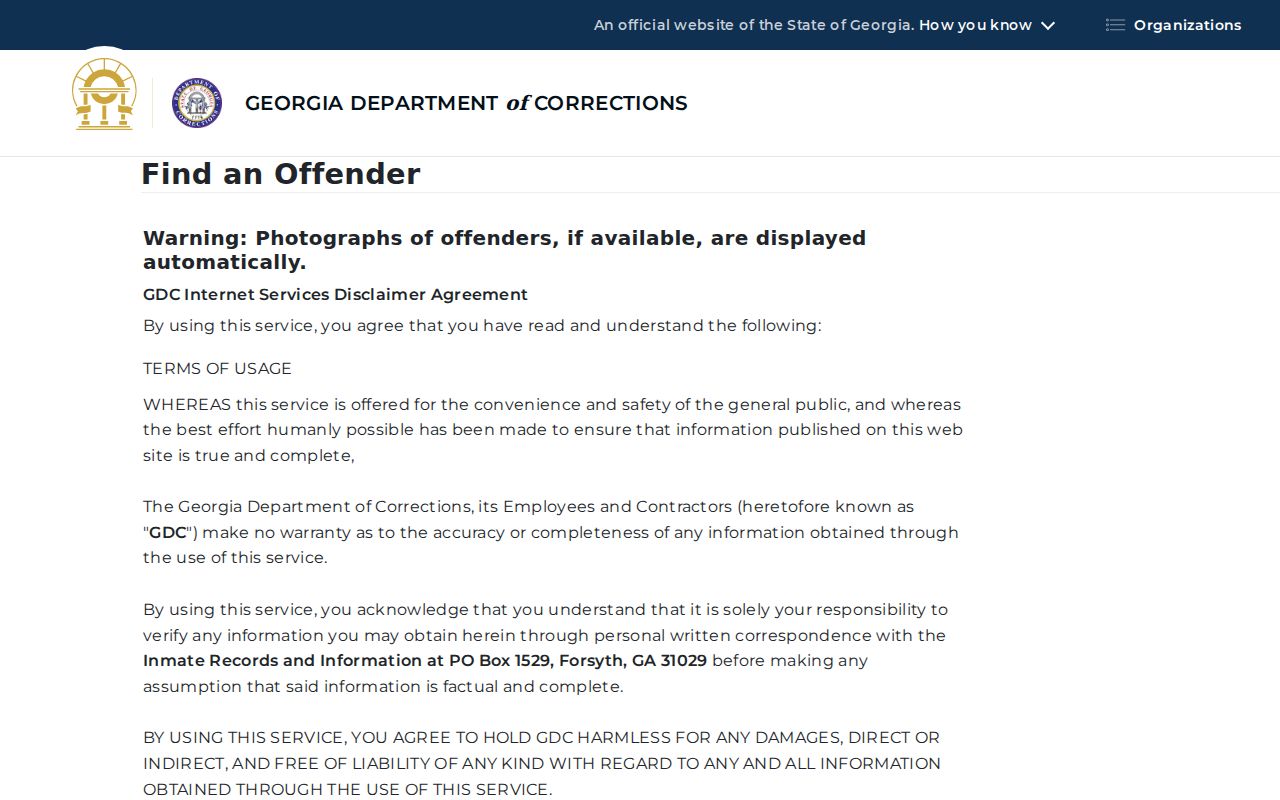
An arrest or booking is not a conviction. Confirm the linked court docket and final disposition. The GBI offender registry is a separate, legally defined database with its own warnings. Never use any registry or public record to threaten, track, or harass a person.
Browse Savannah Historical Directories
Printed directories bridge the years between censuses. The Georgia Historical Society reports most-year Savannah holdings across 1848 to 2001 or 1850 to 2003, plus an address-oriented street index from 1889. Many 1866 to 1960 volumes can be used through library genealogy terminals. Entries may list a resident, spouse, occupation, employer, and street address, while reverse sections move from address to occupant.
Live Oak Public Libraries, the Georgia Historical Society, the Municipal Archives, and the Georgia Archives form the fallback chain. Search name variants and nearby years. For September 1895 through May 1929, a gap in one Georgia Historical Society newspaper index does not mean the newspapers are absent; narrow the date with directories, then browse microfilm or other OCR collections.
The Savannah open-records screen links residents to municipal requests and serves as one current city channel.
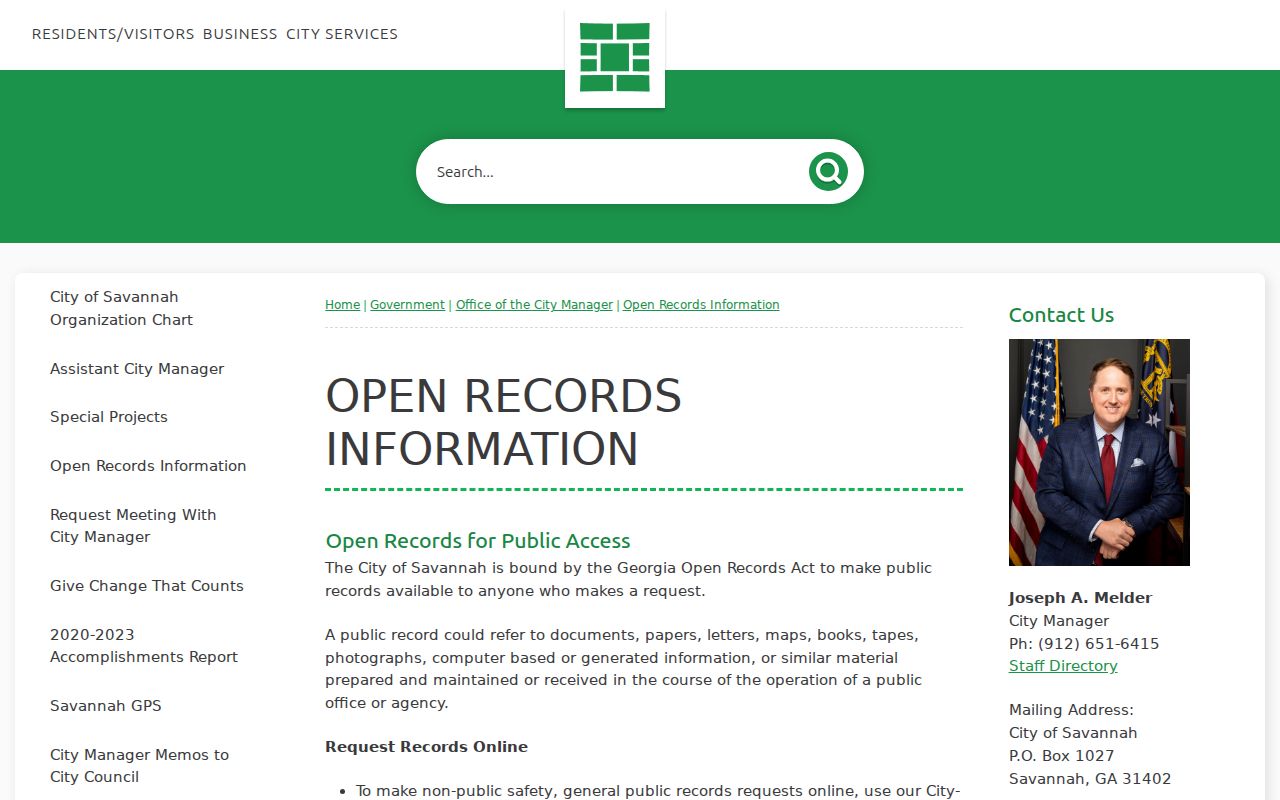
Historical requests should name the department or collection, person, address, date range, and desired format. Archives staff can work more precisely from a series, box, folder, or known record type.
Decode Savannah Wards and Lots
Early deeds may identify a ward, square, trust lot, or garden lot without a modern street number. Later renumbering, lot splits, and mergers can leave a directory address, deed description, and current PIN with no shared text. Municipal Archives ward survey maps from 1939 to 1940 include 252 digitized sheets. Those maps, the 1953 ward-and-lot map, historic building-permit petitions, Sanborn maps, recorded plats, and SAGIS can bridge the forms.
Start with the directory address and year. Find its ward, then compare the deed’s lot language and a map dated near the event. Move forward to the modern parcel only after the historic identity is stable. A map annotation may postdate the underlying survey, and a permit petitioner may be an architect, contractor, or agent rather than the owner or resident.
Protect Private Savannah Addresses
Georgia’s Safe at Home program, created in 2024 and codified at O.C.G.A. § 50-18-150 et seq., supplies qualified participants with address substitution and mail forwarding. It also seals a participant’s voter-roll residence. Public status never means every personal field is open. Birth certificates, adoption and juvenile matters, military discharges, sealed cases, and protected voter data have separate limits.
Official records are preferable to commercial people-finder summaries because they identify a keeper, date, and record role. Even official indexes can lag, omit restricted fields, or contain a filing error. Commercial summaries may merge names and old addresses without showing the source. Use either only for lawful personal research, verify each material fact with the custodian, and respect opt-out or correction routes. Georgia stalking and harassing-communications laws still apply to information found in public files.
Savannah records may support family history, estate work, civic review, or scam checks. Public access never permits surveillance, threats, stalking, or harassment.